Valnerina is a region best discovered gradually. Between work and personal commitments, however, the time we can usually set aside for a trip amounts to little more than a weekend. Two days, then, call for a choice: rather than trying to see everything, it’s better to follow what intrigues you most and let a first visit pave the way for the next. Staying at Castello di Postignano, in the municipality of Sellano, the journey can begin right there in the hamlet and continue into the surrounding area. A short distance away lie Sellano’s historic centre and the Vigi Valley; heading instead towards the course of the River Nera, you reach some of the places that most clearly tell the story of Valnerina’s landscape and history. Here are a few suggestions for anyone wondering what to see in Valnerina in two days: not an itinerary to follow to the letter, but ideas to combine according to the time available, the season and how you wish to experience the weekend.
Start at Castello di Postignano
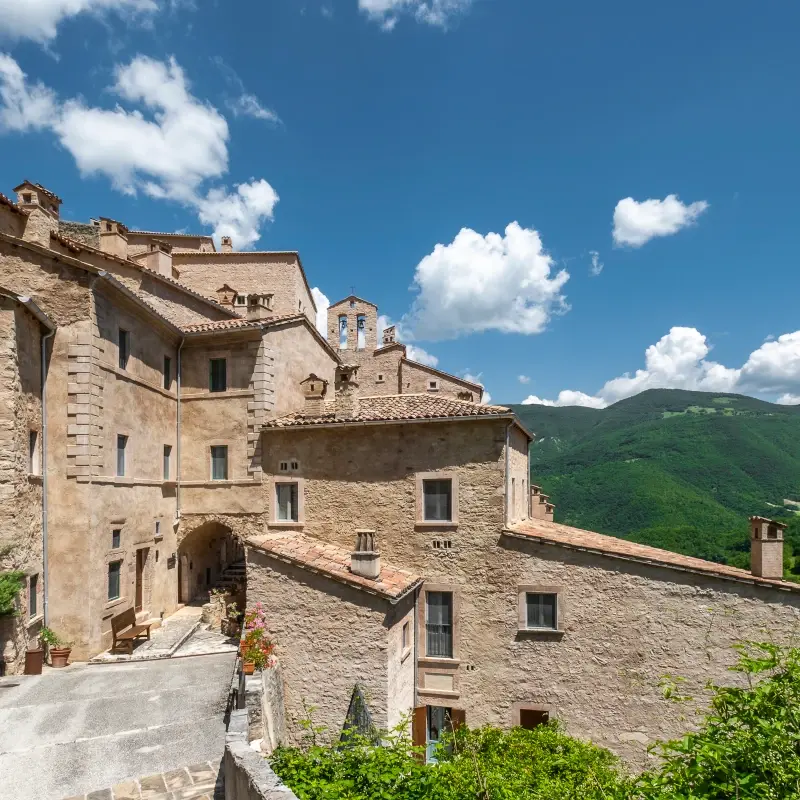
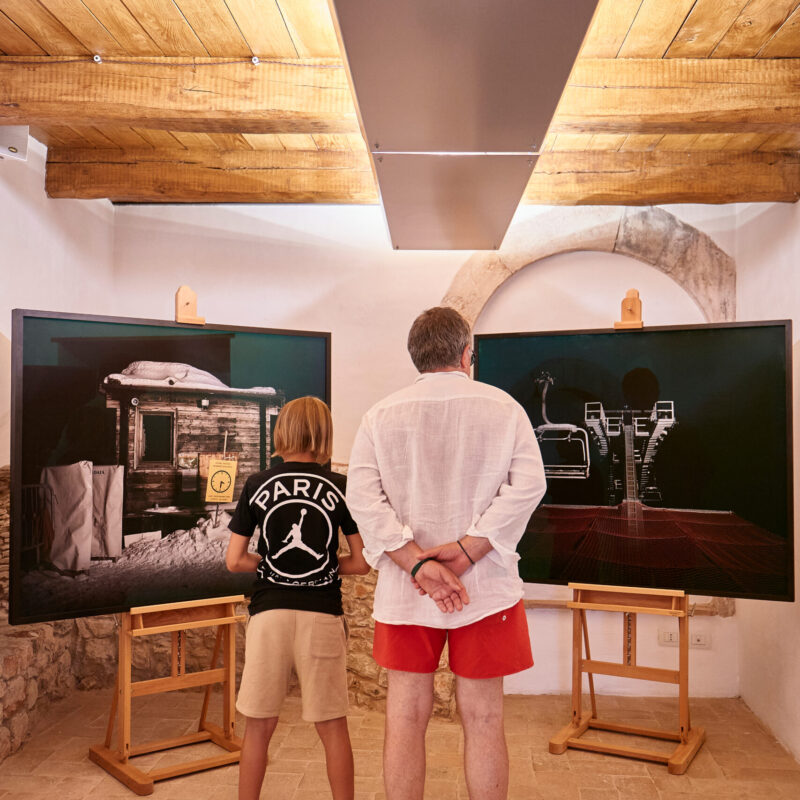
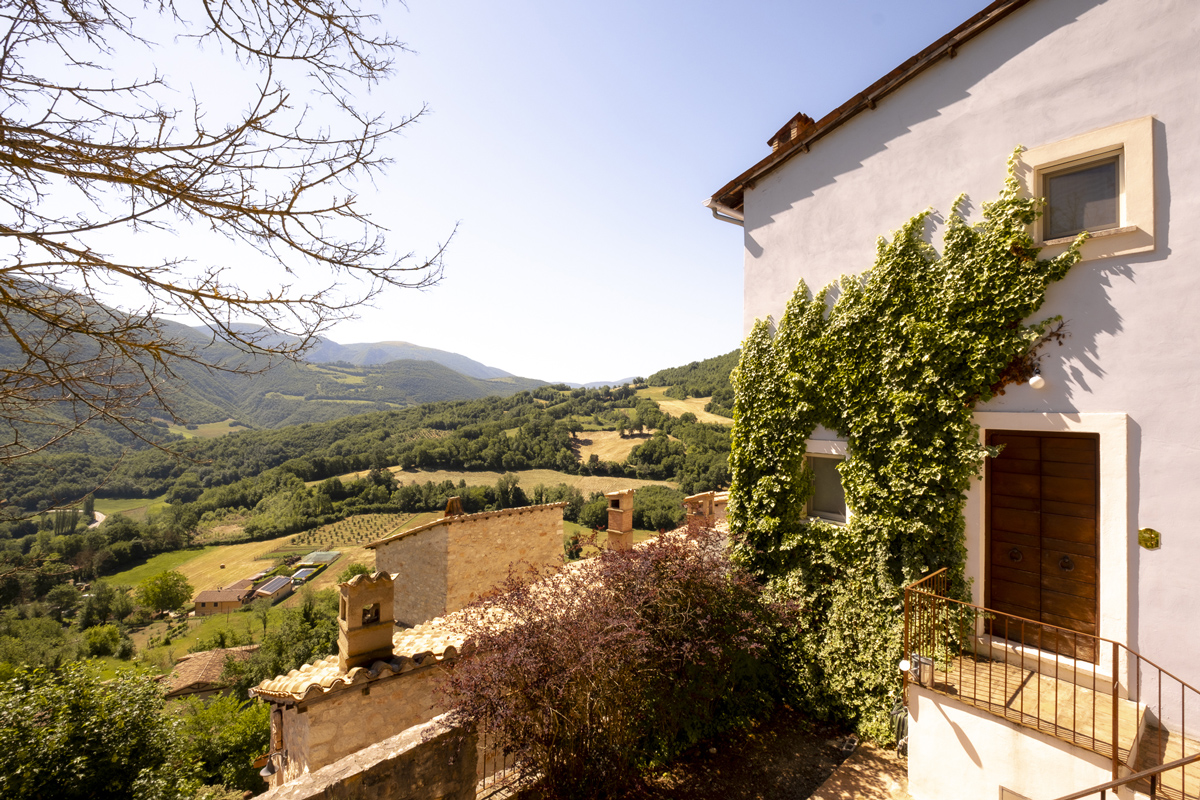
Before setting off to explore the area, it’s worth spending some time in the place where you’re staying. Castello di Postignano is a medieval hamlet brought back to life through a long restoration that respected its original structure: the houses still follow the slope of the hill, linked by stairways and passages that echo the shape of a settlement that grew over the centuries through what Norman Carver called spontaneous architecture. Today the hamlet is also a cultural hub: the Church of SS. Annunziata, founded in the 11th century, hosts concerts and talks, while other spaces host exhibitions devoted to art and photography. Culture offers a different way into the hamlet: following an exhibition also means walking its streets, stepping into its old houses, and gaining a better understanding of the work that has allowed the hamlet to be lived in again. A concert or an exhibition can become the focal point around which to build the rest of the weekend, which is why it’s worth checking the events calendar before booking your stay. From April to October, the Un Castello all’Orizzonte (A Castle on the Horizon) programme brings music, visual arts, literature and talks to the hamlet; in September 2026, the Postignano Music Festival returns.
Sellano and the Vigi Valley, just minutes from the hamlet
To explore the surrounding area without venturing too far, one option is to spend part of the day in Sellano itself. Here you’ll find the Ponte Tibetano, a suspension bridge linking Sellano to the medieval hamlet of Montesanto across the Vigi Valley. The structure measures around 517 metres and reaches a height of 175 metres, with one distinctive feature: the walkway climbs towards its far end, with a positive elevation gain of 68 metres. Once you reach Montesanto, you can choose to stop in the small hamlet or continue on foot down towards the valley floor. The scenic path descends towards Lago del Vigi before leading back to Sellano. It’s a particularly good option for anyone who wants to combine visiting the hamlets with a few hours outdoors and is looking for a more active experience, all within the same municipality as Castello di Postignano.
Towards the Nera: another side of Valnerina to be discovered
If you feel like venturing a little further, you can instead follow the valley towards the River Nera. The landscape around Sellano gradually gives way to one shaped by the river’s course, along which small fortified towns and places tied to the valley’s religious life have grown up over time.
A first stop worth considering is Castel San Felice, around 22 kilometres from Castello di Postignano. The hamlet sits atop a hill close to the Nera and still retains the layout of its ancient fortified centre. At its foot lies the Abbey of Saints Felice and Mauro, one of the finest examples of Romanesque architecture in Umbria. Hamlet and abbey can be taken in together: one nestled on the high ground, the other close to the river. Two different settlements that help you read how the area has been inhabited over the centuries.
Stopping in Vallo di Nera
Continuing along the Nera, you come to Vallo di Nera, one of the villages where Valnerina’s medieval layout is still especially easy to understand. The historic centre coincides with the old castle: the walls survive in part, and the streets follow the slope of the hill up to the highest point of the village. Vallo di Nera is listed among I Borghi più belli d’Italia (The Most Beautiful Villages in Italy) and holds the Touring Club Italiano’s Bandiera Arancione (Orange Flag). Here you don’t necessarily need to seek out a string of monuments; an important part of the visit simply consists of walking into the hamlet on foot and following its streets. That said, it’s worth taking time over the pictorial heritage of its churches: the Church of San Giovanni Battista, for instance, houses 16th-century frescoes by Jacopo Siculo. The village is also home to the Church of Santa Maria Assunta, linked to the Franciscan presence and the area’s medieval artistic heritage. Vallo di Nera is a good choice for anyone who, during a stay at Castello di Postignano, wants to keep exploring how the architecture of Umbria’s small villages has adapted to the landscape.
Scheggino and a landscape shaped by water
Following the Nera further still, you reach Scheggino, which grew up along the riverbanks around a medieval castle. Here, water is woven directly into the shape of the village, as an artificial canal runs through the built-up centre and, just outside the old Porta Valcasana gate, an area rich in springs begins. The Fonti di Valcasana springs can be reached on foot from the village. Over time, these resurgent springs were also used for fish farming; a 19th-century fishpond still survives, and today the area is a natural garden to wander through at a gentle pace. Paths also set off from here, retracing ancient routes once used for transhumance and linked to the local ironworks. Scheggino can therefore become a longer stop, or simply the place to pause before heading back to Castello di Postignano.
The connection with the hamlet also extends to other experiences: on request, Castello di Postignano offers activities in the area including truffle hunting with local guides and a visit to the museum in Scheggino.
Getting to know Valnerina through what you do
Visiting an area doesn’t necessarily mean spending the whole time moving from one hamlet to the next. Guests staying at Castello di Postignano can spend part of the weekend exploring Valnerina by bike: an e-bike hire service reserved for guests is available in the hamlet. The experiences on offer also include rides along the Spoleto-Norcia trail and activities on the River Nera. The same goes for the local food culture: meetings with producers, tastings and visits to local farms and businesses are all possible, offering a way to get to know Valnerina through what is grown and produced here. There’s no need to fill every hour of the weekend with a new destination — a morning can be devoted to a hamlet and the afternoon to an experience, or you might decide to stay longer at Castello di Postignano and only venture out for part of the day.
Where to stay in Valnerina: spending the weekend at Castello di Postignano
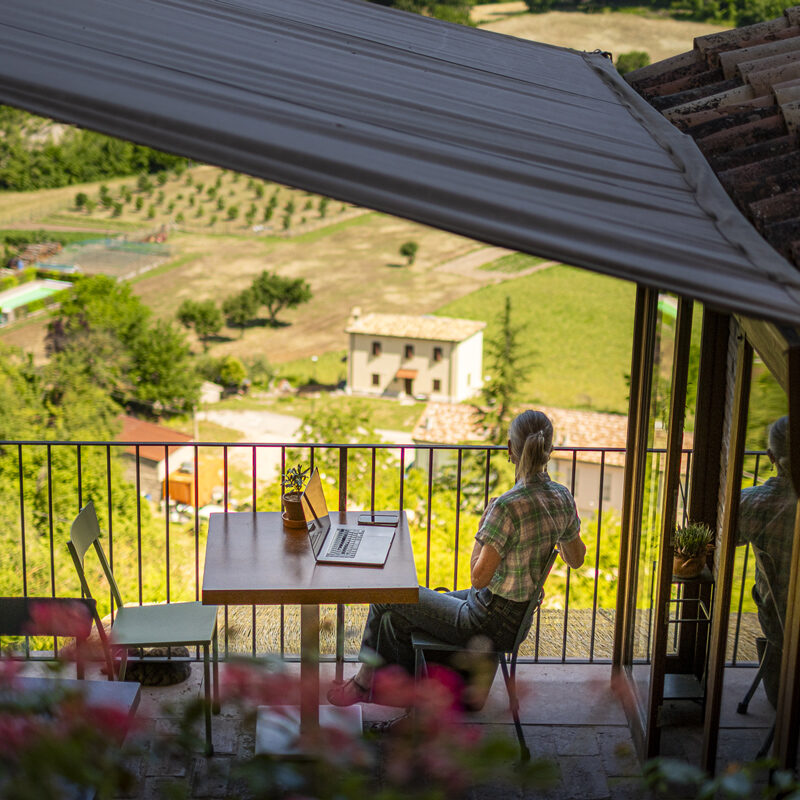
Choosing where to stay in Valnerina also means deciding what role you want your accommodation to play. At Castello di Postignano, the suites are set within the hamlet’s restored houses. So after a day spent exploring the surrounding area, you return each evening still immersed in the history and landscape you’ve come to know. Guests have access to the wellness centre and the swimming pool with sun terrace, along with other spaces dedicated to leisure time. La Casa Rosa, meanwhile, lets you carry the day through to the table with a cuisine rooted in the ingredients and produce of the area. This, ultimately, is what a weekend at Castello di Postignano offers: the chance to visit Valnerina without having to choose between the journey and the stay. You can leave the hamlet to discover its surroundings and then return, allowing yourself the time to simply stay a while.
Two days are unlikely to cover everything there is to see, but they can spark a familiarity with these places and, above all, point towards where you’ll want to return next time.
Discover Castello di Postignano and choose how to spend your next weekend in Valnerina.