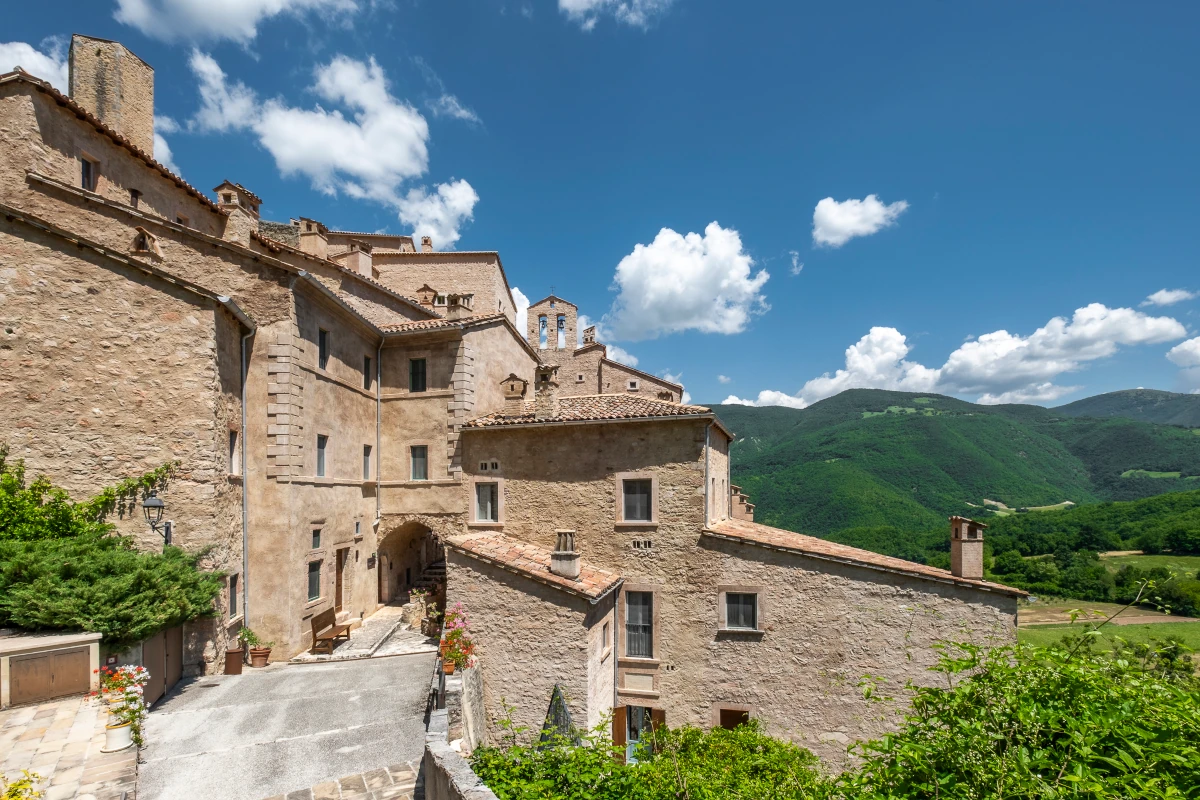
In 1963, the last eight families left Castello di Postignano, by then without any upkeep. With them, the hamlet’s daily life came to a halt too: the houses stood empty, and the spaces that had until then accompanied the lives of its inhabitants lost their purpose.
When its restoration began in 1994, the challenge went beyond simply preserving the buildings. How do you give a whole medieval hamlet a contemporary purpose again, while preserving its architecture?Quando, nel 1994, iniziò il suo recupero, la sfida andava oltre la conservazione degli edifici. How do you give a whole medieval hamlet a contemporary purpose again, while preserving its architecture?
The restoration of Castello di Postignano started from this question. Bringing the hamlet back meant finding a way of living very different from the one it was originally built for.
Restoring a hamlet means starting from its shape
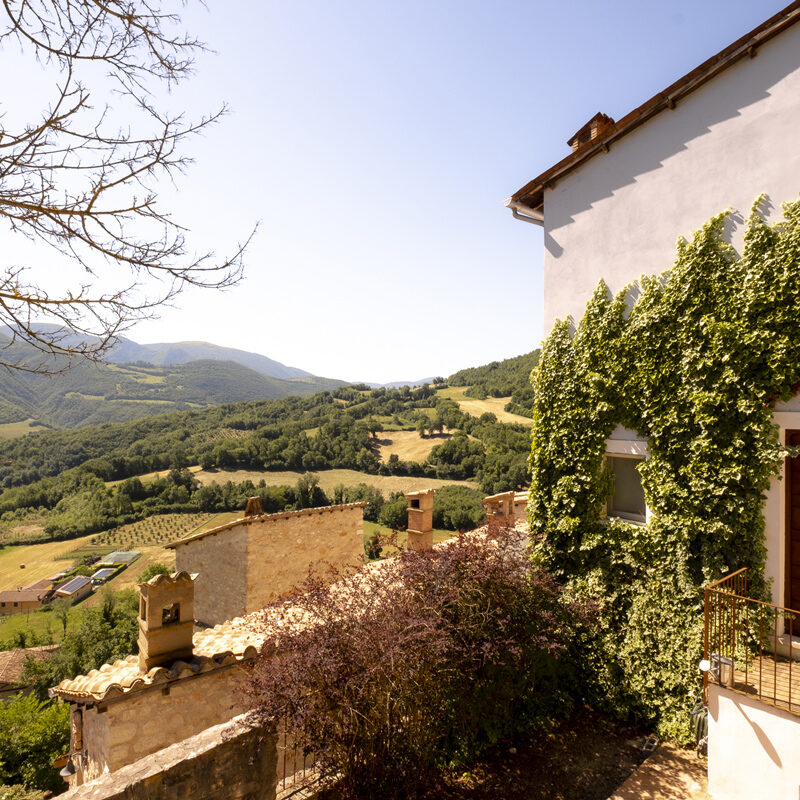
Castello di Postignano grew up over time, following the slope of the hill and the needs of the people who lived there. The houses lean against one another, and the pathways rise and fall in step with the shape of the land. The restoration preserved this diversity, which can still be sensed today when stepping into the properties: some span several levels, others open directly onto views of the Valnerina.
When a medieval house has to become a home again
Preserving the architecture was only part of the work. For Castello di Postignano to be lived in again, its houses needed to meet the demands of contemporary life.
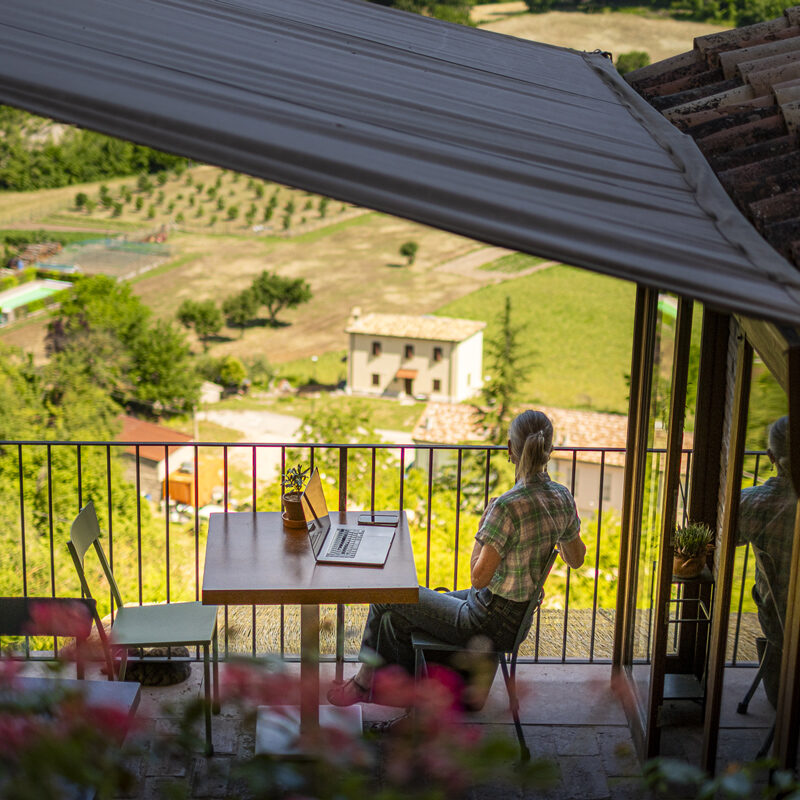
Seismic safety naturally played a central role. On top of this came the work needed to upgrade the spaces: modern systems, fibre-optic connections, and solutions designed to make moving around the hamlet easier. The result today is tangible: buildings left empty for decades have become homes again. Alongside the suites at Castello di Postignano there are private residences too, allowing people to live in the hamlet all year round.
From houses to the life of the hamlet
Houses alone aren’t enough to bring a place back to life. What’s needed are places to meet, and occasions that draw people back into shared spaces.
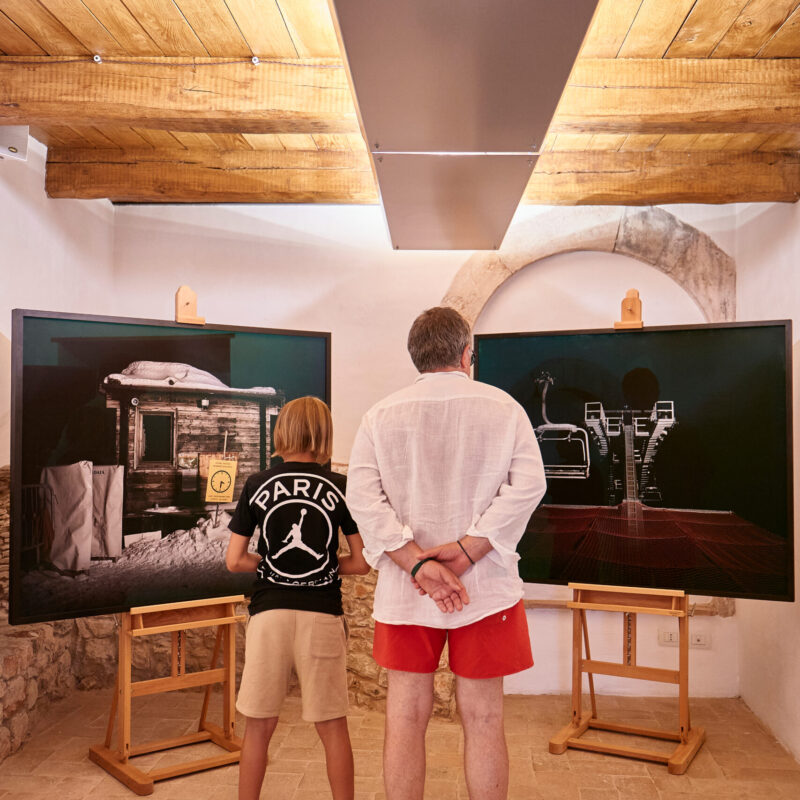
This is also why the restoration of Castello di Postignano has gradually brought in spaces with new purposes. The Church of SS. Annunziata hosts concerts and talks. Other spaces are home to exhibitions and cultural activities. La Casa Rosa has brought mealtimes back to the hamlet, while the reading room and communal areas offer further places to pause and experience it. What has remained is the relationship between private and shared life: whoever lives in a house still belongs to a wider space. This is where architectural restoration begins to produce something that touches everyday life.
What it means to live at Castello di Postignano today
Since 1963, the way of living in small Apennine settlements has changed profoundly, along with the needs of those who choose to spend time there. The Castello di Postignano project has therefore looked for a workable form of continuity: preserving the hamlet’s character while making it compatible with present day life. Private residences and temporary hospitality coexist within the same architectural fabric. Those who own a home can spend long periods there; those staying for a few days step, if only temporarily, into the same web of lanes and houses. The presence of dining and cultural activities also helps give rhythm to the days. In this way, the hamlet becomes a lived-in place once again, with different timings and ways of living from those of the past. Perhaps this is one of the most interesting outcomes of the restoration: Castello di Postignano keeps its own architectural identity, while the life it welcomes belongs fully to the present.
Restoration as a possibility for the future
The story of Castello di Postignano opens up a broader reflection on the fate of Italy’s abandoned hamlets. Saving a building means preserving both its fabric and its memory. When work is carried out on an entire settlement, another question comes into play: what use will that place have once the restoration is complete?
Its historic buildings have opened their doors to people once more, and contemporary uses have given the restored spaces back a sense of everyday life. This is what sets apart a hamlet that has simply been preserved from a place that has a future again. A restored building can be admired. A hamlet only fully regains its meaning when someone comes back to live in it.
At Castello di Postignano, after decades of silence, some of those doors have become front doors once more.